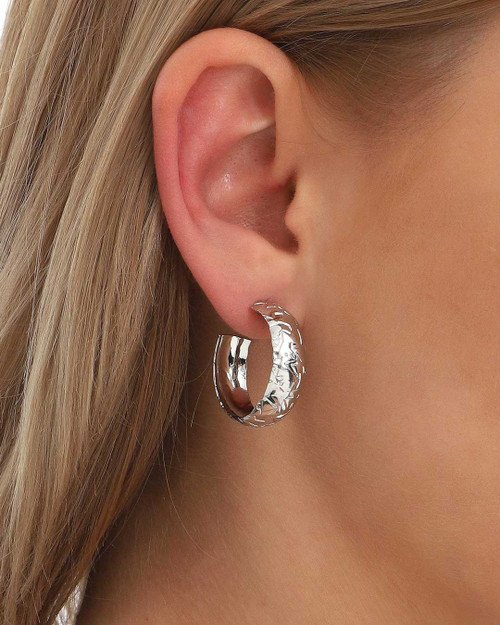
Hand-shaped brass swirls into open hoops, each cradling a single cowrie shell sourced from the Indian Ocean off Mombasa. Tiny seed beads in cream and black sit at the ear wire, nodding to coastal Kenyan beadwork traditions.
- Material: Hammered brass, natural cowrie shell, glass seed beads
- Size: 3.125"(Plus Hook) x 2"
- Details: Open spiral hoop silhouette with a center-suspended cowrie drop and beaded accents at the hook
- Origin / Craft: Handmade in Kenya using locally gathered cowrie shells and hand-shaped brass wire
The hammered finish on the brass catches light unevenly, giving each hoop a slightly different surface texture. The spiral form is asymmetric by design — wire bent and flattened by hand rather than machined — so no two pairs read exactly alike. Cowrie shells have circulated as adornment and currency across East Africa for centuries.
Care: Wipe brass with a dry cloth and keep shells away from prolonged moisture.
design: An open, asymmetric spiral hoop hand-shaped from hammered brass wire, with a single cowrie shell suspended at its center and cream-and-black seed beads accenting the ear wire.
size: 3.125" (including hook) x 2"
material: Hammered brass, natural cowrie shell, glass seed beads
features: hand-shaped spiral hoop silhouette, hammered brass finish, center-suspended cowrie shell, cream and black seed bead accents at the hook, asymmetric hand-formed wire
care: Wipe the brass gently with a dry cloth and keep the shells away from prolonged moisture.
disclaimer: Because each hoop is bent, flattened, and hammered by hand rather than machined, the surface texture and spiral curve vary slightly from piece to piece.
The Story
The cowrie shells set at the center of these hoops are gathered from the Indian Ocean near Mombasa, on Kenya's Swahili coast. For centuries, cowries moved along East African trade routes as both currency and adornment, valued for their smooth, glossy form long before they became a decorative motif here.
The cream and black seed beads strung at the ear wire nod to coastal Kenyan beadwork traditions, where small glass beads are worked into color patterns for personal adornment. The palette is pared back to a single accent rather than a full beaded panel, letting the brass spiral and the shell carry the design.
The open, looping hoop itself is a contemporary silhouette built from a traditional material and hand technique — hammered brass wire — rather than a reproduction of a historical form. It reflects how artisans on the coast continue to adapt long-used materials like cowrie shell and brass into pieces suited to everyday wear.
A length of brass wire is bent by hand into the open spiral hoop, then hammered along its surface — a cold-forging step that flattens and work-hardens the metal while leaving the slightly uneven, light-catching texture visible on the finished piece. A cowrie shell gathered locally along the Mombasa coastline is wire-wrapped into a small spiral cage and hung at the center of the hoop, with seed beads threaded onto the ear wire above it. Because the wire is shaped and hammered by hand rather than cast or machine-formed, no two hoops curve or catch the light in quite the same way.
Craft & Materials
- Made In: Kenya
- Craft Tradition: Hand-shaped, hammered brass wirework with coastal Kenyan beadwork accents
- Ideal For: Someone who likes jewelry with a warm-weather, coastal feel and visible handmade texture
- Wear It With: Pair with linen, tan, and other warm neutrals for a relaxed, coastal-inspired look
- Purpose: Everyday wear, warm-weather accessory, gifting
- Metal: Brass
Questions & Answers
What is the shell in the center made from?
It's a natural cowrie shell gathered from the Indian Ocean near Mombasa, Kenya, wire-wrapped in place — so size, shading, and surface pattern vary slightly shell to shell.
How should I care for the brass?
Wipe the brass gently with a dry cloth after wear and keep the shells away from prolonged moisture to preserve their finish.
Will my hoops look exactly like the photo?
Close, but not identical — the brass wire is bent, flattened, and hammered by hand, so each spiral's curve and surface texture is slightly one-of-a-kind.
Are these lightweight enough for everyday wear?
Yes. The open hoop is formed from a single hammered wire rather than solid metal, keeping the earrings light despite their size.
Where are these earrings made?
They're handmade in Kenya, using locally gathered cowrie shells and hand-shaped brass wire.